
For nearly a decade, the water at Lake Martin was being intentionally drained and the water level lowered about 2-3 foot every year in September through a new spillway draingate on the southside near the Nature Conservancy Visitor Center.
Not only was there a drawdown of the water every autumn, the water was being kept below the normal high level it was in the late 1990's before the Nature Conservancy installed the draingate on their property and thus the power to control the water level effecting wildlife and everyone who attempted to use the recreational resources in the Lake Martin ecosystem.
This was being done with the belief and explaination that it benefited the birds in the rookery and the fish in the lake by improving water quality.
After writing articles in my swamp tour blog about the corelation between mismanagement of water resources(draining the lake) and the declining bird population, for the first time in September 2009 the lake was not drained as it had been for the last 7 or 8 years.
Historically, when the water was at it's highest levels in about the year 2000,
the nesting, wading bird population peaked.

I know it is not the best photo, but taken from Rookery Road by a tourist friend of mine in 2000
Most estimates of the number of birds in the rookery were in my opinion, very unrealistically low.
I should know, I have been in the rookery doing swamp tours for over 20 years.

A photo of me on tour in the rookery in 1998 by
Brian Miller Until about 10 years ago, it looked like snow covered trees during April and May.
Although there was poaching of birds and alligators, in the rookery, and duck hunting season overlapped the initial start up of the rookery every year, the birds multiplied, and the rookery expanded.
Until last year, I always believed the decline of the population of the nesting birds was due to a swamp tour guide(who I started in the business in May of 1999), who did night tours into the rookery area year round, with a big Q-beam light. He was not stopped from conducting these disturbing activities until March 2006 when the great "mysterious" disappearance of the nesting birds along Rookery Road occurred.
Last year I realized that the birds never started to leave
until the lake was being drained.
The true cause of the decline of the nesting bird population is still unknown and an issue of great speculation by many intelligent, concerned, and well-educated people.
As far as I am concerned the swamp tour guide is not off the hook.
The Bottom Line:
My hope and expectation is, as the rookery expands in population it will expand geographically as well. And once again the birds will occupy nests along Rookery Road allowing photographers, birdwatchers and nature lovers an up-close opportunity to experience what I have observed as a swamp tour guide for over 25 years.
For me, this how it all began...
More than 25 years ago

Before I ever built the houseboat and became a fulltime
Louisiana Swamp Tour Guide, I was guiding personal friends of mine into the Atchafalaya basin swamp to put them into close proximity of nesting birds.

A Black Crowned Night Heron standing over her chicks on the nest.
What really amazed my friends was the fact that I could bring them 10-15 feet away from these birds and not disturb the birds normal behavior. Because I lived on a houseboat and worked as a commercial fisherman, I visited the birds everyday, and we developed a relationship of mutual trust and respect.

My houseboat at Grand Avoille Cove in the Atchafalaya Basin
Because of my guide skills and service to photography friends,
they suggested I become a full-time guide.
I told them they were crazy,
because no one would ever pay me to drive them into a swamp!
Little did I know they were looking into my future at the time.
I never planned, dreamed or imagined becoming a swamp tour guide, because back then, swamp tours were not even in existence in Louisiana.

A photo by Marc Garanger, a National Geographic photographer from France,
he took this photo of me in my old wooden skiff, over twenty years ago.
As I grew up hunting and fishing the marsh and swamps with my father, I was being groomed to be a swamp tour guide and never knew it at the time.
I took this with my cheapie pocket camera from the road overlooking the rookery north of Lake Martin, while guiding Larry this week.

A Rosette Spoonbill

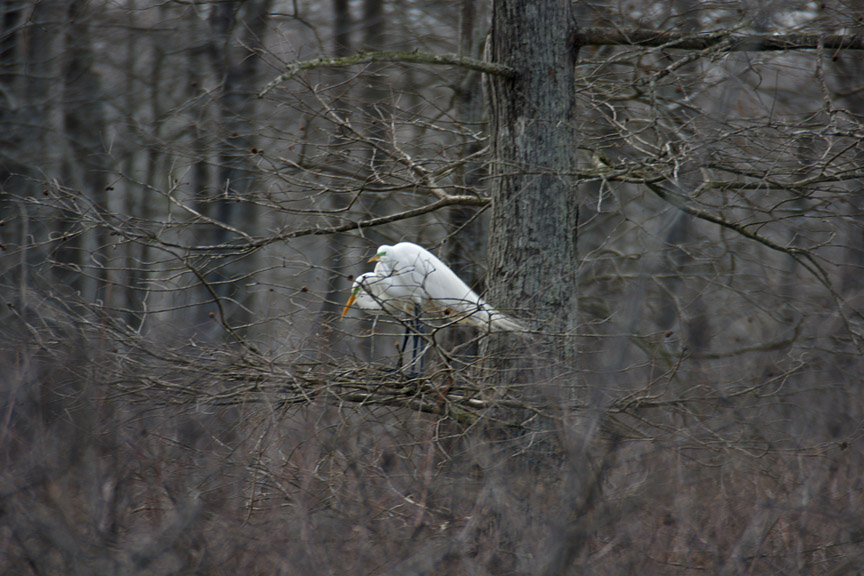
An egret and heron roost at another rookery south of Lake Martin

My first butterfly of the season!

And the dragonflies are coming out too!
Because it was my photographer friends who inspired me to be a tour guide, I still love to do private photo safaris to remote locations for special people on occasion.

My friend Larry with a real wildlife camera,
focusing in on a rosette spoonbill engaged in nesting activities.

I took Larry and his wife to some private areas outside of Lake Martin this week to do a photo safari of nesting birds and to eat at The Boiling Point in New Iberia.

We had fried catfish, fried crawfish, and fried shrimp, and as an after thought, I ordered a half order of boiled crawfish too!
Maybe Larry can send me some of his photos for me to share with you here in an upcoming post.
In the meantime here are a couple of pictures sent to me by some other Lake Martin safari photographers recently.
A photographer named Al Guidry was on the road and took a photo of me as I was leaving the landing to start a
Lake Martin Swamp Tour a few weeks ago and sent it to me as seen below.

The aluminum crawfish skiff I built to replace the old wooden one as a commercial fisherman over twenty years ago is still my ultimate swamp tour boat today, because it allows me to get into the shallow, densely vegetated areas most boats cannot access, and that is where the most wildlife is likely to be found.
If you would like to contact Al to order prints,
or to hire him for photography services;
PORTFOLIO 2000 ACTION PORTRAITS
by AL GUIDRY of LAFAYETTE, LA
337 406-0927
email:portfolio2000foto@cox.net
The photos of the birds of Lake Martin,
are provided by Al Guidry for your viewing pleasure.


Another photographer, named Claude Nall, took a panoramic photo from his kayak on the north side of the lake, of these two huge Lake Martin alligators below.

This is the kind of photo opportunities you can have if you join me for a swamp tour or
photo safari at Lake Martin or some of the other private locations I guide my friends to in
My Wild Louisiana!
See you at the lake...

Bobalou, my swamp tour guide dog for over 10 years.
Bob is a
Louisiana Catahoula.

 The two photos above were taken on tour this past week.




 All photos above(except the first two) are courtesy of Claude Nall.


 courtesy of Claude Nall
 The photo above and below are courtesy of Claude Nall


